Texas Construction in 2026: What the Boom Means for Heavy Equipment Shops
Texas is adding population, roads, data centers, and industrial facilities at a pace that's straining every piece of heavy equipment in the state. Here's what's driving it and what it means for repair shops.
Talox Editorial
Industry Desk
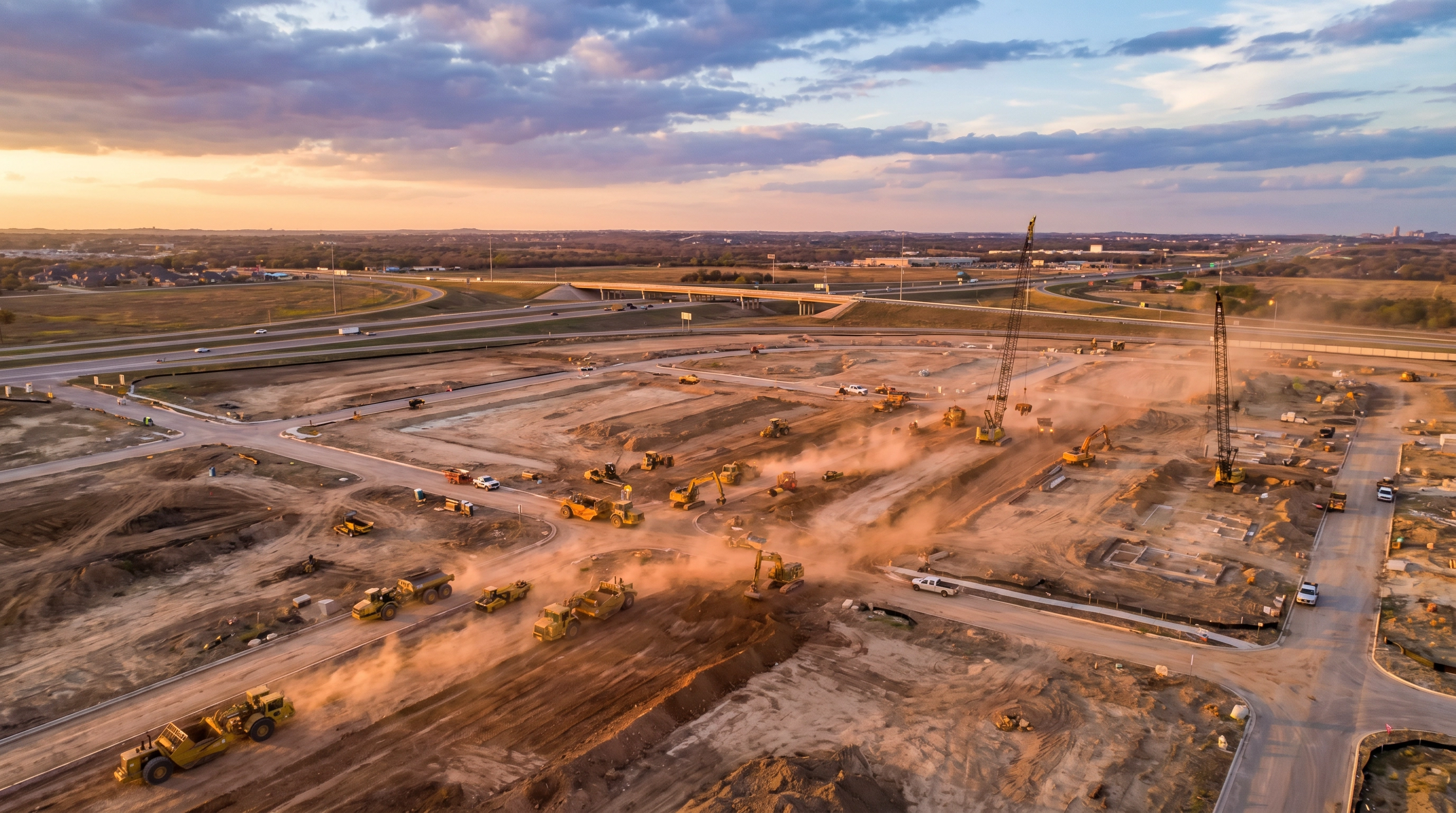
Texas Construction in 2026: What the Boom Means for Heavy Equipment Shops
Texas has been the fastest-growing state in the country for most of the past decade, and 2026 is showing no signs of deceleration. The Texas Department of Transportation has committed $104 billion to infrastructure over the next decade. The semiconductor and data center buildout — driven by TSMC's Taylor facility, multiple hyperscale data centers in the Dallas-Fort Worth corridor, and ongoing industrial expansion in Houston — is adding billions more in construction activity.
For heavy equipment repair shops in Texas, this is both an opportunity and a stress test.
Where the work is concentrated
The construction activity isn't evenly distributed. The highest concentrations are in the suburban growth corridors north and west of Dallas-Fort Worth (Princeton, Celina, Prosper, Frisco, McKinney), the I-35 corridor between Austin and San Antonio, and the industrial expansion zones in the Houston Ship Channel area.
Princeton, Texas grew 30.6% in a single year according to U.S. Census Bureau Vintage 2024 data — the fastest-growing city in the state. Fulshear, west of Houston, has grown 211% since 2020. These are not gradual trends. They represent massive, sustained demand for earthwork, utility installation, road construction, and commercial development — all of which requires heavy equipment, and all of which eventually requires heavy equipment repair.
What this means for equipment utilization
High construction activity means high equipment utilization. High utilization means more hours on machines, more wear on components, and more frequent maintenance intervals. It also means that when a machine goes down, the contractor needs it back faster — because there's another job waiting.
For repair shops, this translates to more work and more urgency. Shops that can turn around a repair quickly and get a machine back on a job site are commanding premium rates. Shops that are slow — whether because of technician capacity, parts availability, or administrative bottlenecks — are losing business to competitors who can move faster.
The technician shortage is real in Texas
Fullbay's 2025–2026 State of Heavy-Duty Repair report documented that the industry needs to fill an estimated 73,500 heavy equipment technician positions over the next five years. In Texas, where the construction boom is driving demand faster than the workforce pipeline can respond, the shortage is particularly acute.
Shops that are growing in this environment are doing it by retaining the technicians they have — through competitive pay, good working conditions, and the kind of shop management that doesn't make technicians' jobs harder than they need to be. Shops that are struggling are often losing technicians to competitors or to the construction companies themselves, which are increasingly hiring their own in-house mechanics.
The data center buildout is a new category of work
The hyperscale data center construction happening in the Dallas-Fort Worth area and in other Texas markets is creating demand for a specific type of heavy equipment work that many shops haven't historically done: generator maintenance and repair. Data centers run on massive diesel backup generators, and those generators require regular maintenance and occasional major repairs.
Shops that have the capability to service large industrial diesel generators are finding a new revenue stream in the data center buildout. The work is different from construction equipment repair in some ways, but the core diesel mechanical skills transfer.
What shops should be doing now
The construction boom in Texas will not last forever. Construction cycles turn, and the shops that are well-positioned when the cycle eventually slows are the ones that used the boom years to build capacity, systems, and customer relationships — not just to chase volume.
The practical priorities are: build technician capacity now while the labor market is competitive, invest in shop management systems that can handle higher volume without proportionally more administrative overhead, and develop relationships with the fleet managers and contractors who are driving the growth. Those relationships will outlast any individual construction project.
Tags
Ready to take control of your AR?
Start your free trial and see how Talox automates collections, syncs your platforms, and keeps cash flowing.
Get the next article in your inbox
Join shop owners and mechanics who get Talox industry insights, data reports, and field guides — no sales pitches, just the good stuff.
No spam. Unsubscribe anytime.
More in Industry Insights
The Outskirts Are Open for Business: How the Suburban Sprawl Is Creating a New Kind of Equipment Operator
6 min read
OEM vs. Aftermarket: The Honest Conversation Your Parts Vendor Doesn't Want You to Have
6 min read
The Towns Nobody Saw Coming: How Princeton, Celina, and Fulshear Are Reshaping Heavy Equipment Demand in Texas
7 min read