Georgia and Florida: Two Markets, Two Stories, One Big Opportunity for Heavy Equipment Shops
Atlanta's industrial expansion and Florida's infrastructure surge are creating different but equally significant opportunities for heavy equipment repair shops in the Southeast.
Talox Editorial
Industry Desk
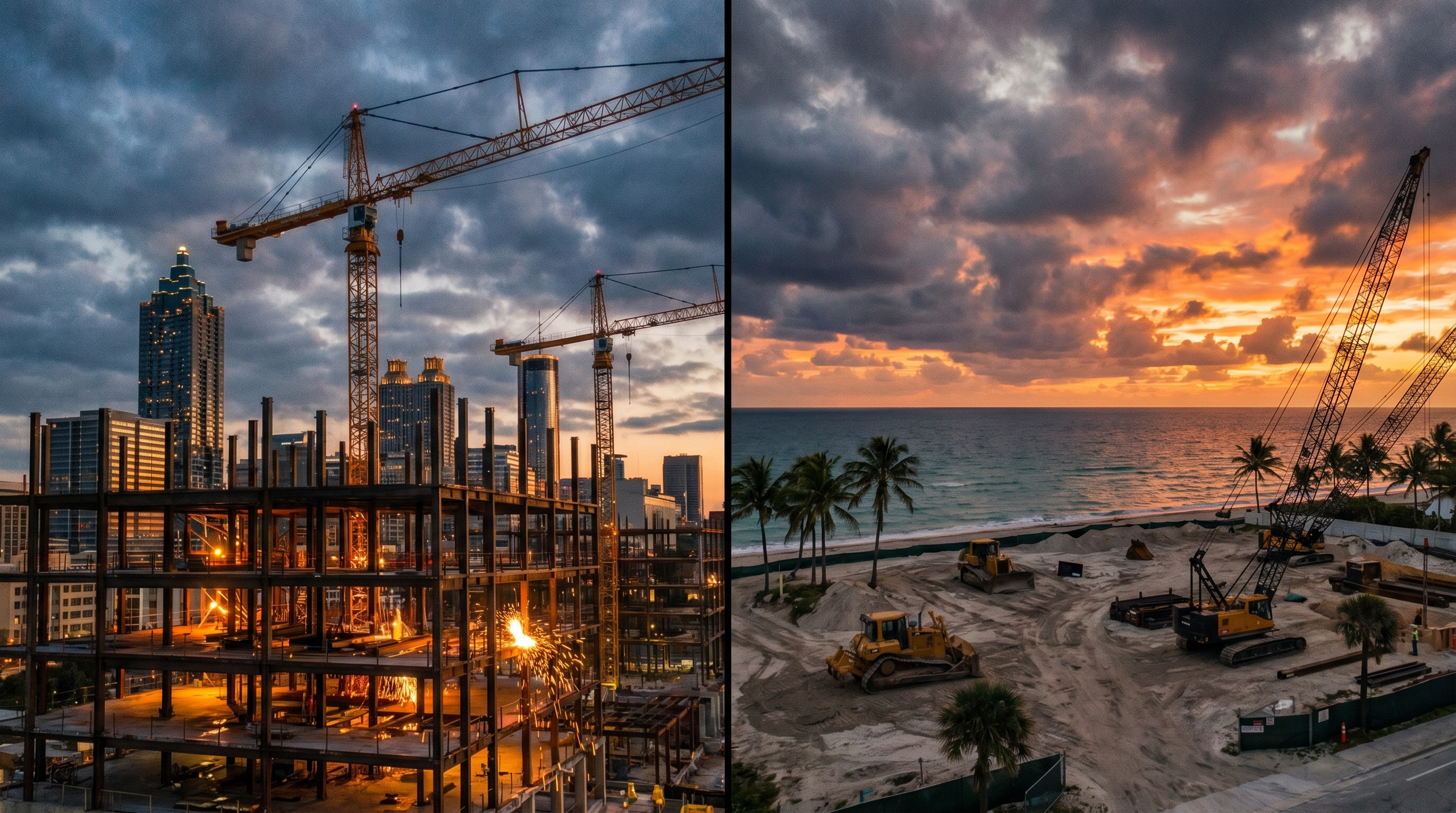
Georgia and Florida: Two Markets, Two Stories, One Big Opportunity for Heavy Equipment Shops
The Southeast is in the middle of a construction and industrial expansion that rivals what's happening in Texas. Georgia and Florida are the two largest markets in the region, and they're being driven by different forces — which creates different opportunities for heavy equipment repair shops.
Georgia: the port and the EV supply chain
Georgia's construction activity is anchored by two major drivers. The first is the Port of Brunswick, which has become one of the largest heavy equipment import hubs in the country — moving more than 53,000 units of farm, construction, and mining equipment in 2025 according to reporting from the Atlanta Journal-Constitution. The port's expansion is ongoing, and the logistics infrastructure around it is growing to match.
The second driver is the electric vehicle supply chain. Georgia has attracted Hyundai's Metaplant, Rivian's manufacturing facility, and a cluster of battery and component suppliers along the I-20 and I-85 corridors. These facilities require massive site preparation, utility installation, and ongoing maintenance of industrial equipment — all of which flows through heavy equipment repair shops in the region.
Atlanta itself is also seeing significant infrastructure investment. The Phase II of the $45.8 million 'Spiderweb' interchange project in the metro area, completed in spring 2025, is one of several major road projects that have kept heavy equipment working continuously in the region.
Florida: infrastructure and the hurricane rebuild cycle
Florida's construction market is driven by a combination of population growth and infrastructure investment. The state's major construction projects in 2026 include significant highway expansion in the Tampa-Orlando corridor, ongoing residential and commercial development in the Miami-Fort Lauderdale market, and a wave of infrastructure hardening projects driven by hurricane preparedness requirements.
The hurricane rebuild cycle is a distinctive feature of the Florida heavy equipment market. After a major storm, the demand for excavators, loaders, and debris-clearing equipment spikes dramatically — and the equipment that's been sitting in salt air and floodwater needs significant repair work. Shops that are positioned to handle post-storm surge work, with the parts inventory and technician capacity to respond quickly, can see significant revenue in the weeks and months following a major storm.
Florida's major construction projects in 2026 are also driving hiring pressure that is creating technician shortages similar to what Texas is experiencing. The Birm Group's analysis of Florida construction projects identified multiple major projects creating simultaneous demand for heavy equipment operators and mechanics across the state.
What the Southeast opportunity looks like for repair shops
For heavy equipment repair shops in Georgia and Florida, the current environment is one of the most favorable in recent memory. Equipment utilization is high, contractors are willing to pay for fast, quality repairs, and the pipeline of new construction projects extends well into the future.
The constraint, as in Texas, is technician capacity. Shops that can attract and retain skilled heavy equipment mechanics are growing. Shops that can't are leaving work on the table.
The other constraint is administrative capacity. High volume creates administrative burden — more work orders, more invoices, more parts to track, more customers to manage. Shops that are running on manual processes or outdated software are finding that the administrative overhead grows faster than the revenue when volume increases. Investing in shop management systems that can handle higher volume without proportionally more administrative work is one of the highest-return investments a growing shop can make in this environment.
The Brunswick port connection
For shops in coastal Georgia and the surrounding region, the Port of Brunswick represents a specific opportunity worth understanding. Equipment that comes through the port — construction equipment, agricultural equipment, mining equipment — often needs pre-delivery inspection, minor repairs, and preparation before it goes to dealers or end users. Shops that develop relationships with port logistics operators and equipment dealers can access a steady stream of this work.
The port's expansion plans suggest this opportunity will grow rather than shrink over the next several years.
Tags
Ready to take control of your AR?
Start your free trial and see how Talox automates collections, syncs your platforms, and keeps cash flowing.
Get the next article in your inbox
Join shop owners and mechanics who get Talox industry insights, data reports, and field guides — no sales pitches, just the good stuff.
No spam. Unsubscribe anytime.
More in Industry Insights
The Outskirts Are Open for Business: How the Suburban Sprawl Is Creating a New Kind of Equipment Operator
6 min read
OEM vs. Aftermarket: The Honest Conversation Your Parts Vendor Doesn't Want You to Have
6 min read
The Towns Nobody Saw Coming: How Princeton, Celina, and Fulshear Are Reshaping Heavy Equipment Demand in Texas
7 min read