Fort Myers: Why Southwest Florida Is the Next Hotbed for Heavy Equipment Repair Shops
A conversation with a local owner-operator revealed what the data confirms: Southwest Florida's post-Ian rebuild is creating a multi-year surge in heavy equipment demand that most shops aren't prepared for.
Talox Editorial Team
Industry Research
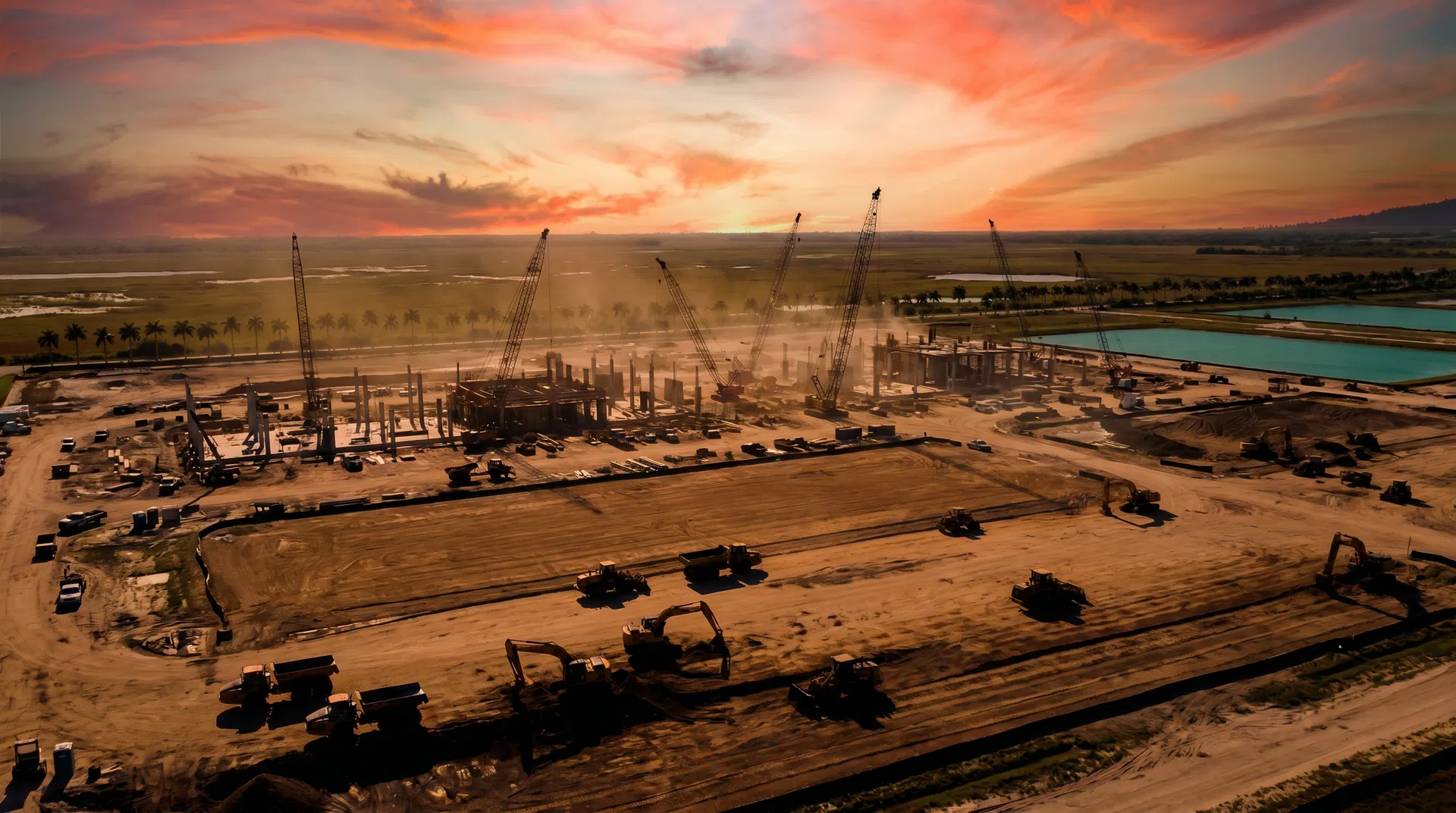
Fort Myers: Why Southwest Florida Is the Next Hotbed for Heavy Equipment Repair Shops
A few months ago, we sat down with a heavy machine repair owner-operator based in the Fort Myers area. He wasn't looking for software. He was looking for breathing room. His shop was running harder than it ever had — more work orders, more fleet customers, more equipment coming through the bay — but the back office hadn't kept up. Invoices were aging. Payments were slow. And he was spending evenings chasing money instead of running his business.
His situation inspired us to look more closely at what's actually happening in Southwest Florida. What we found confirmed everything he described — and then some.
The Post-Ian Rebuild: Still Just Getting Started
When Hurricane Ian made landfall near Fort Myers Beach on September 28, 2022, it became one of the costliest natural disasters in U.S. history, causing an estimated $112 billion in damage across Lee, Charlotte, and Collier counties. The destruction was catastrophic — but the rebuild that followed has been one of the most sustained construction booms in Florida's modern history.
Three years later, the work is far from over. The Florida Department of Economic Opportunity estimated that more than 42,000 structures in Lee County alone sustained major damage or were destroyed. Rebuilding to current Florida Building Code standards — which require elevated foundations, impact-resistant construction, and upgraded utility connections — means the reconstruction cost per structure is significantly higher than pre-Ian replacement value.
For heavy equipment repair shops in the region, this translates directly into sustained demand. Every excavator, bulldozer, skid steer, and crane operating on a rebuild site is accumulating hours at an accelerated rate. Equipment that might have needed a major service every 18 months is now cycling through at 12 months or less.
Cape Coral's Utility Expansion: A $1 Billion Equipment Driver
Beyond the rebuild, Cape Coral — the largest city by land area in Florida — is in the middle of a citywide utility expansion project that represents one of the largest municipal infrastructure investments in the state. The project extends water, sewer, and irrigation services to areas of the city that have historically relied on septic and well systems.
The scale of this project is difficult to overstate. Thousands of miles of pipe, hundreds of lift stations, and years of continuous excavation work across a city that spans 120 square miles. The equipment running this project — directional drills, excavators, vacuum trucks, compactors — is operating in sandy, corrosive soil conditions that accelerate wear on hydraulic systems, undercarriage components, and ground-engaging tools.
Shops positioned within a 30-mile radius of Cape Coral are seeing a disproportionate share of this work. Mobile repair operations in particular are thriving, as fleet operators prefer on-site service to minimize downtime on active job sites.
The Seven Islands Development and the Next Wave
In late 2024, Cape Coral city leaders approved the Seven Islands development — a mixed-use project that will bring over 300,000 square feet of retail and dining, approximately 1,300 apartment units, four public parks, and a 125-room hotel to the northern waterfront. Construction is expected to begin in 2026 and run through the end of the decade.
This project, combined with ongoing residential construction across Lee County, means the equipment demand pipeline in Southwest Florida extends well beyond the Ian rebuild. The region is not experiencing a temporary spike — it is undergoing a structural transformation that will require sustained heavy equipment deployment for the next five to seven years.
What This Means for Shop Owners
The owner-operator we spoke with put it simply: "The work is there. The problem is getting paid for it." That observation captures the central challenge facing repair shops in high-growth markets. Revenue is up, but cash flow is complicated by slow-paying fleet operators, extended payment terms on large commercial accounts, and the administrative burden of managing AR across dozens of active customers.
In a market like Fort Myers — where construction activity is running at two to three times its historical pace — a shop's ability to collect efficiently is just as important as its ability to turn wrenches. Shops that automate their AR collections, track lien deadlines, and maintain clean billing contact data across their customer base will capture a disproportionate share of the value being created in this market.
The opportunity in Southwest Florida is real. The shops that build the back-office infrastructure to match their shop-floor capacity will be the ones still standing — and growing — when the next wave of development arrives.
Talox was built for shops exactly like the one we described above. If you're running a heavy equipment or diesel repair operation in Southwest Florida and you're ready to automate your back office, start your free trial today.
Tags
Ready to take control of your AR?
Start your free trial and see how Talox automates collections, syncs your platforms, and keeps cash flowing.
Get the next article in your inbox
Join shop owners and mechanics who get Talox industry insights, data reports, and field guides — no sales pitches, just the good stuff.
No spam. Unsubscribe anytime.
More in Industry Insights
The Outskirts Are Open for Business: How the Suburban Sprawl Is Creating a New Kind of Equipment Operator
6 min read
OEM vs. Aftermarket: The Honest Conversation Your Parts Vendor Doesn't Want You to Have
6 min read
The Towns Nobody Saw Coming: How Princeton, Celina, and Fulshear Are Reshaping Heavy Equipment Demand in Texas
7 min read