Fewer Vendors, More Leverage: The Case for Consolidating Your Parts Relationships
Most shops spread their parts purchasing across too many vendors, leaving money and service quality on the table. The shops that have figured out how to consolidate strategically are getting better prices, faster delivery, and a phone call that gets answered on Saturday morning.
Talox Editorial
Industry Intelligence Desk
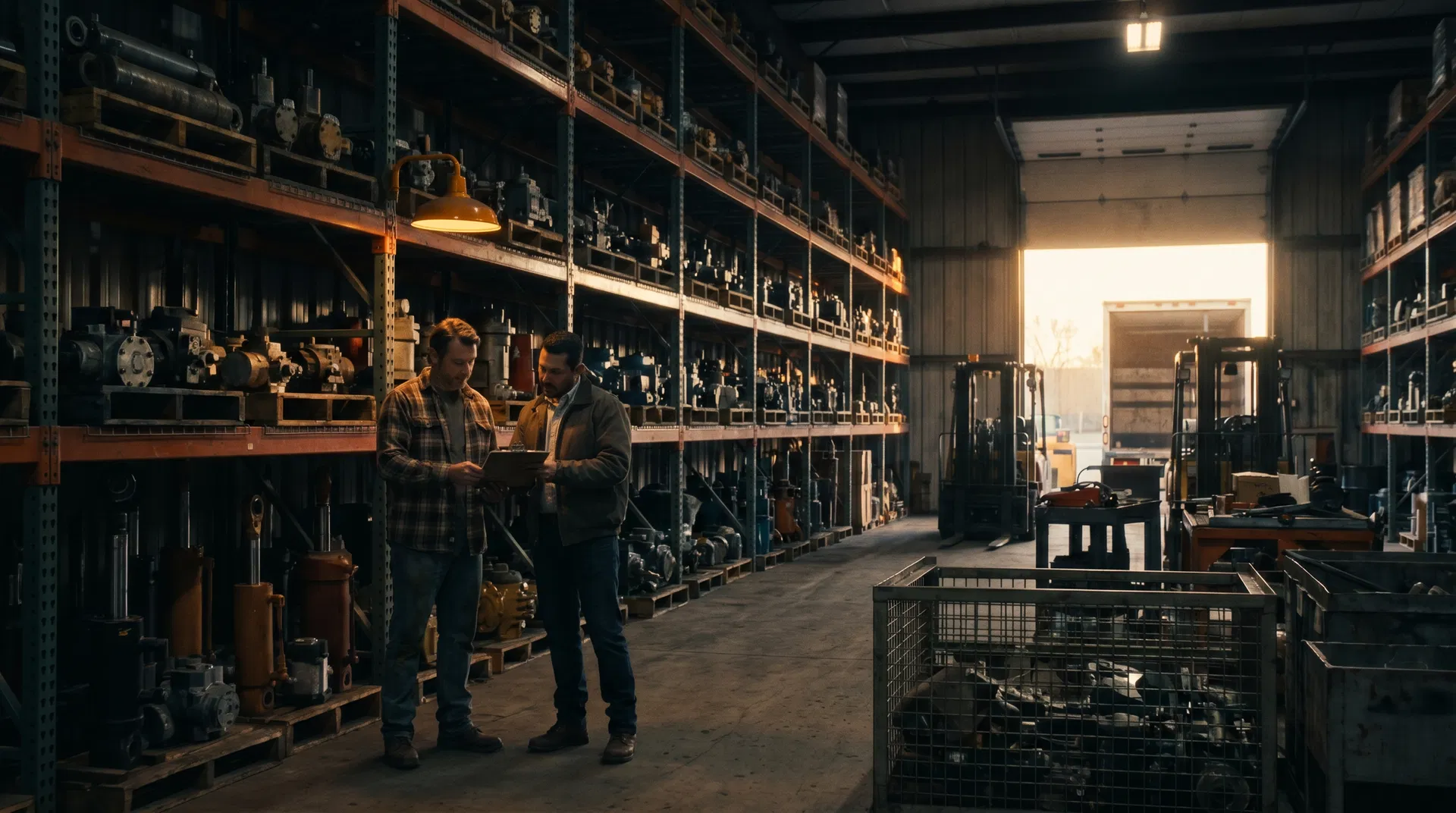
Fewer Vendors, More Leverage
Ask the parts manager at a typical heavy equipment repair shop how many vendors they buy from, and the answer is usually somewhere between fifteen and thirty. There is the local OEM dealer for Caterpillar. Another dealer for Komatsu. A national distributor for filters. A regional supplier for hydraulic hoses. A specialty supplier for undercarriage components. A couple of online sources for the parts that nobody local carries. And so on.
This is not a strategy. It is the accumulated result of years of solving individual problems — finding a source for a specific part, adding a vendor for a specific machine type, keeping a relationship alive because someone gave you a good deal once. The result is a purchasing operation that is fragmented, difficult to manage, and leaving significant money on the table.
The shops that have thought carefully about their vendor relationships have generally arrived at the same conclusion: fewer vendors, managed more intentionally, produce better outcomes than many vendors managed reactively.
The Leverage Equation
The fundamental economics of vendor consolidation are straightforward. A vendor who receives $5,000 per month from your shop has a different relationship with you than a vendor who receives $500 per month. The $5,000 vendor will prioritize your emergency calls. They will work harder to find a part that is not in their local stock. They will offer better pricing, extended payment terms, and return privileges on slow-moving inventory. They will call you when they see a price increase coming so you can stock up before it hits.
The $500 vendor will do none of these things, not because they are bad vendors, but because the economics do not support it. You are not important enough to their business to warrant the extra effort.
The consolidation strategy is to identify the two or three vendors who can cover the majority of your purchasing volume, concentrate your business with them, and build the kind of relationship where you are an important customer — not just another account.
What to Look for in a Primary Vendor
The criteria for selecting a primary parts vendor are different from the criteria for a spot purchase. For a primary vendor, the relevant factors are: depth of inventory in the product lines you use most, reliability of delivery (not just speed, but consistency), quality of technical support, willingness to work with you on pricing and terms, and the quality of the relationship at the account manager level.
The last point is underappreciated. The account manager is the human being who picks up the phone when you have an emergency. A good account manager who knows your shop, knows your machines, and knows your customers is worth more than a slightly better price from a vendor whose account manager changes every six months.
The ShopView and Fullbay Dimension
One of the practical advantages of using shop management software that integrates with parts suppliers — as both ShopView and Fullbay do — is that it creates a data trail that supports the vendor consolidation conversation. When you can show a vendor exactly how much you have purchased from them over the past twelve months, broken down by product category, you have a much stronger foundation for a pricing negotiation than a general sense that you buy a lot from them.
This data also helps you identify which vendors are actually your primary suppliers versus which ones feel like primary suppliers because you call them often. Sometimes the vendor you call most frequently is not the vendor you spend the most money with — and that mismatch is worth understanding.
The Relationship Investment
Building a genuine vendor relationship takes time and intentionality. It means visiting your primary vendors in person, not just placing orders online. It means introducing your parts manager to their account manager and making sure they have each other's cell phone numbers. It means being honest about your volume and your needs, and asking directly for the terms and service levels that would make the relationship work better.
It also means being a good customer — paying on time, communicating clearly about your needs, and giving the vendor enough lead time on predictable orders that they can serve you well. The vendors who go the extra mile for their best customers do so because those customers make it easy to serve them.
The shops that have built these relationships describe them in terms that sound more like partnerships than vendor relationships. They know their account manager's family. They get calls when there is a supply disruption coming. They have access to inventory that is technically allocated to other customers but gets redirected because of the relationship. That is what leverage looks like in practice.
Tags
Ready to take control of your AR?
Start your free trial and see how Talox automates collections, syncs your platforms, and keeps cash flowing.
Get the next article in your inbox
Join shop owners and mechanics who get Talox industry insights, data reports, and field guides — no sales pitches, just the good stuff.
No spam. Unsubscribe anytime.
More in Operations

When to Grow Your Shop — and How Automating AP/AR Gives You the Bandwidth to Do It
5 min read
The High-Maintenance Ten: Which Machines Spend the Most Time in Your Bay
8 min read
Your Inventory Is Not Your Savings Account: A Data-Driven Approach to Stocking the Right Parts
6 min read