The High-Maintenance Ten: Which Machines Spend the Most Time in Your Bay
Not all iron is created equal when it comes to service intervals. Here's a data-driven look at the ten machines that generate the most repair orders — and why understanding their failure patterns is the difference between a reactive shop and a profitable one.
Talox Editorial
Industry Intelligence Desk
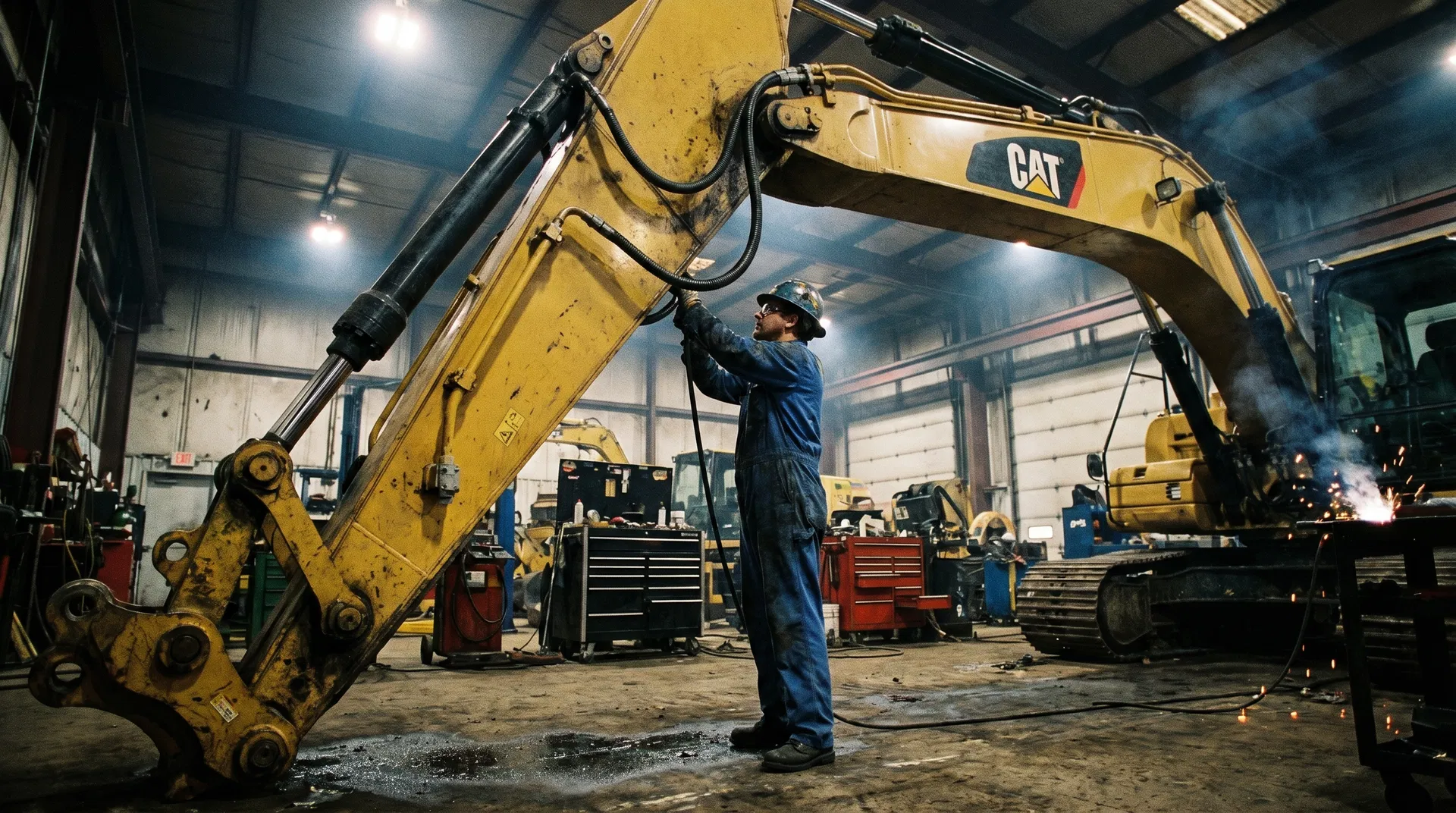
The High-Maintenance Ten
Every shop has that one machine — the one that seems to find its way back into the bay no matter what you do. The hydraulic excavator that eats seals. The motor grader that goes through cutting edges like candy. The articulated dump truck that always seems to need something right before a long weekend.
There is a reason certain machines generate disproportionate repair volume, and it is not bad luck. It is physics, operating conditions, and the fundamental design tradeoffs that make heavy equipment capable of doing what it does. Understanding the failure patterns of the ten highest-maintenance machine types is one of the most valuable things a shop can do — not just for scheduling and parts stocking, but for the conversations you have with your customers about what to expect.
1. Tracked Excavators
Hydraulic excavators consistently generate the highest repair volume of any machine category. Hydraulic failures alone account for approximately 45 percent of all excavator breakdowns, with emergency repairs averaging between $85,000 and $145,000 per incident when downtime costs are factored in. The complexity of the hydraulic system — multiple pumps, control valves, swing motors, travel motors, and cylinder circuits all operating simultaneously — creates numerous failure points.
Undercarriage wear is the other major cost driver. On a tracked excavator working in abrasive soil conditions, undercarriage components can represent 40 to 50 percent of total maintenance costs over the machine's life. Track links, rollers, idlers, and sprockets all have finite service lives that are highly sensitive to operating conditions. A machine working in rocky Texas caliche will chew through undercarriage components significantly faster than the same machine working in sandy coastal soil.
2. Crawler Dozers
Bulldozers share the undercarriage challenge with excavators, and they add the complexity of the final drive system. Final drive failures — typically caused by oil seal failures that allow contamination into the planetary gear assembly — are among the most expensive repairs in the shop, often running $8,000 to $15,000 per side. The insidious thing about final drive failures is that they are often preventable with regular oil sampling and seal inspection, but they are easy to defer when the machine is running fine.
The blade and its associated hydraulic cylinders are another high-frequency service item. Cylinder rod seals on dozer blades take constant abuse from debris and ground contact, and a leaking cylinder on a dozer working a tight site is not something that gets deferred.
3. Motor Graders
Motor graders are precision instruments masquerading as brutes. The circle drive — the large ring gear that allows the blade to rotate — is a high-wear component that requires regular lubrication and periodic adjustment. Shops that service graders regularly know that the circle drive is one of those items that customers often neglect until it becomes a major repair.
The articulated frame joint on modern graders is another service-intensive area. The pivot bearings and seals in the articulation joint take significant stress, particularly on machines working rough terrain or making frequent direction changes.
4. Hydraulic Excavators (Wheeled)
Wheeled excavators have all the hydraulic complexity of their tracked counterparts, with the addition of a tire and axle system. The outrigger cylinders and their seals are a frequent service item, and the travel system — particularly on machines that spend significant time on paved surfaces — generates wear patterns that tracked machines don't experience.
5. Skid Steer Loaders
Pound for pound, skid steers may generate more repair orders per machine than any other category. Their compact size and versatility mean they get used for everything, often in conditions they were not designed for. The drive chain system on chain-drive skid steers is a high-wear item that requires regular tensioning and periodic replacement. Hydraulic hoses on skid steers take constant abuse from the tight confines of the machine and the frequent articulation of the loader arms.
The loader arm pivot pins and bushings are another high-frequency service item. On a machine that cycles its loader arms hundreds of times per day, these wear points accumulate hours quickly.
6. Articulated Dump Trucks
The articulation joint on an ADT is a masterpiece of engineering that also happens to be a significant maintenance challenge. The pivot bearings, seals, and electrical connections that run through the articulation point are all subject to accelerated wear, and a failure in this area can take a machine out of service for days. The oscillation joint — which allows the rear frame to twist relative to the front — is similarly complex.
The suspension system on ADTs, particularly the front axle suspension cylinders, is another high-frequency service area. Machines working in rough terrain accumulate wear in the suspension system at a rate that surprises many operators.
7. Compactors (Soil and Asphalt)
Vibratory compactors are, by design, machines that shake themselves apart slowly. The eccentric weight assemblies that generate the compaction force are subject to bearing wear, and the isolation mounts that protect the operator cab and machine frame from the vibration are finite-life components. Shops that service compactors regularly keep isolation mount sets in stock — they are a predictable replacement item.
The drum bearings on vibratory rollers are another high-frequency service item. Water intrusion into the drum bearing housing is a common failure mode, particularly on machines working wet or muddy conditions.
8. Backhoe Loaders
Backhoes are the Swiss Army knives of the equipment world, and their versatility comes at a maintenance cost. The loader arm and backhoe boom pivot pins and bushings accumulate wear from the constant cycling of both ends of the machine. The stabilizer pads and their cylinders take ground contact abuse. The four-wheel-drive front axle, on machines so equipped, adds another service-intensive system.
The hydraulic system on a backhoe is simpler than an excavator's, but it still requires regular attention. The loader control valve and the backhoe control valve are both subject to wear, and a sticking or leaking control valve is a common complaint.
9. Telehandlers
Telehandlers have become ubiquitous on construction sites, and their boom extension system is a high-maintenance area. The boom wear pads — which allow the boom sections to slide smoothly — require regular inspection and replacement. A worn wear pad that goes unaddressed will damage the boom sections themselves, turning a $200 maintenance item into a $2,000 repair.
The four-wheel-steer system on telehandlers adds complexity to the steering and suspension systems. The rear steer cylinder and its associated linkage are a frequent service area.
10. Road Reclaimers and Milling Machines
Road reclaimers and cold planers are arguably the most maintenance-intensive machines per operating hour of any category. The cutting drum — which is essentially a high-speed impact device — consumes cutting teeth at a rate that varies dramatically with pavement hardness. On a machine working hard aggregate, a full set of cutting teeth may last only a few hours of operation. The drum bearings and the water spray system that cools the cutting teeth are also high-frequency service items.
What This Means for Your Parts Inventory
The pattern across all ten machine categories is consistent: hydraulic seals and hoses, undercarriage components, filters, and wear items drive the majority of repair volume. A shop that stocks hydraulic seal kits for the top five excavator models in its service area, keeps a selection of undercarriage components for the crawler machines it services most frequently, and maintains a robust filter inventory for the engine and hydraulic systems it sees most often will be able to turn jobs faster and reduce the parts-chasing that kills technician efficiency.
The shops that are best at this are not guessing at what to stock. They are looking at their repair order history — or using tools that analyze it for them — and letting the data tell them where their inventory dollars should go. That is not a revolutionary insight. But it is one that a surprising number of shops have not yet acted on.
Tags
Ready to take control of your AR?
Start your free trial and see how Talox automates collections, syncs your platforms, and keeps cash flowing.
Get the next article in your inbox
Join shop owners and mechanics who get Talox industry insights, data reports, and field guides — no sales pitches, just the good stuff.
No spam. Unsubscribe anytime.
More in Operations

When to Grow Your Shop — and How Automating AP/AR Gives You the Bandwidth to Do It
5 min read
Fewer Vendors, More Leverage: The Case for Consolidating Your Parts Relationships
5 min read
Your Inventory Is Not Your Savings Account: A Data-Driven Approach to Stocking the Right Parts
6 min read