Your Inventory Is Not Your Savings Account: A Data-Driven Approach to Stocking the Right Parts
Most shops either overstock slow-moving parts that tie up capital or understock the fast-movers that kill technician efficiency. The answer isn't intuition — it's repair order data. Here's how to read it.
Talox Editorial
Industry Intelligence Desk
Your Inventory Is Not Your Savings Account
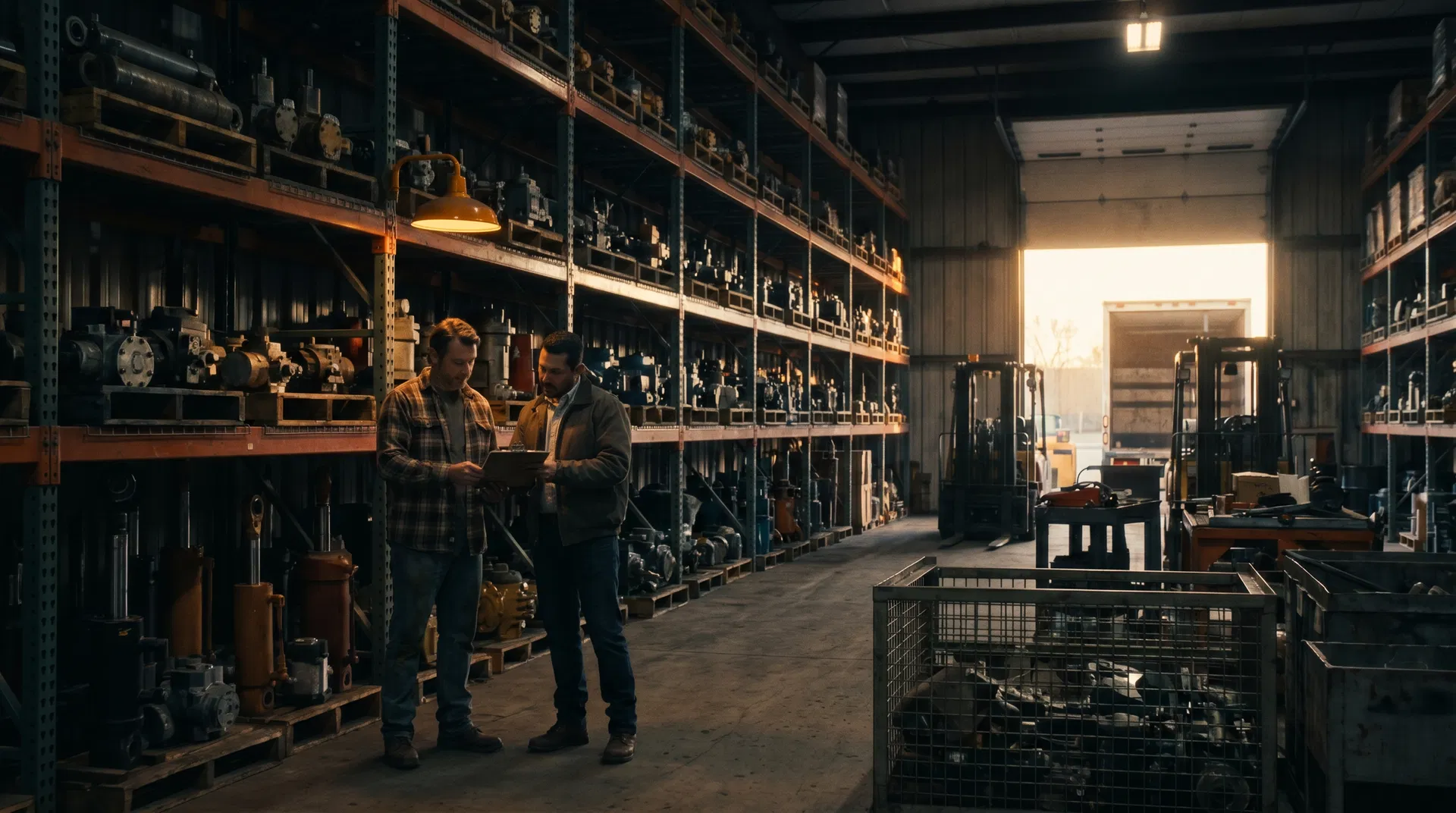
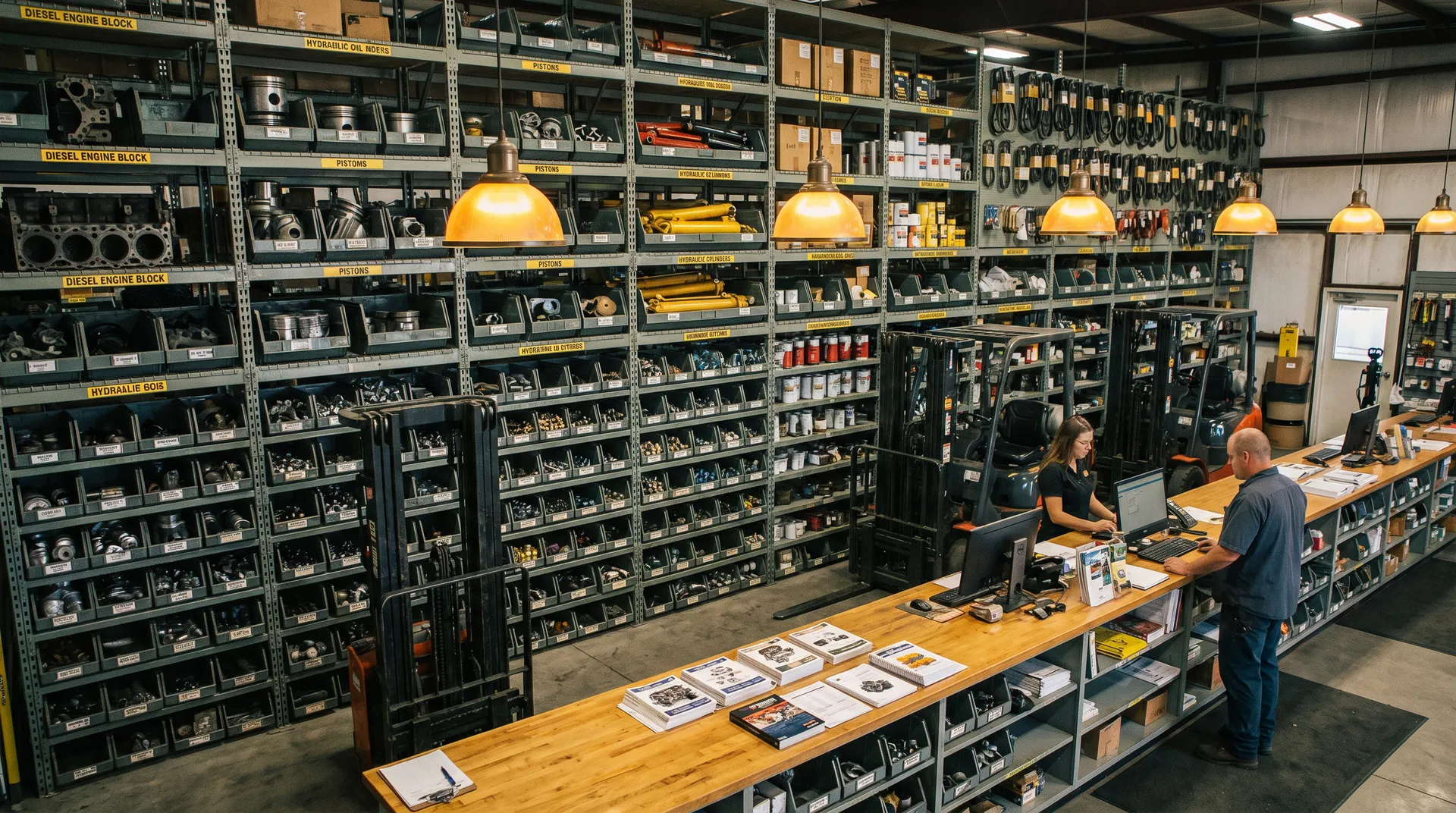
There is a particular kind of shop owner who takes pride in a well-stocked parts room. Walk through the door and you will see rows of shelves, neatly organized, with parts for machines that may or may not have come through the bay in the last eighteen months. It feels like preparedness. It feels like professionalism. What it actually is, in many cases, is cash sitting on a shelf.
Fullbay's industry analysis puts it plainly: the cost of parts should represent no more than 25 percent of sales in a well-run diesel repair shop. The parts manager's job is not just to have parts available — it is to have the right parts available at the right time, while keeping the cost of that inventory from eating into the shop's margin. Those two objectives are in constant tension, and the shops that manage them well are the ones that have figured out how to let their repair order data do the thinking.
The Two Failure Modes
Shops tend to fail at parts inventory in one of two ways. The first is overstocking: buying parts based on intuition, vendor recommendations, or the memory of that one time a customer needed a specific seal kit and you didn't have it. The result is capital tied up in slow-moving inventory, storage space consumed by parts that may never be used, and a false sense of security that comes from having a lot of stuff on the shelf.
The second failure mode is understocking the fast-movers. This is the one that actually costs you money in real time. When a technician has to stop work on a job to wait for a part, that technician's efficiency drops to zero for the duration of the wait. On a shop that bills $150 per hour for labor, a two-hour parts delay on a job costs $300 in unbillable technician time — and that is before you account for the customer's frustration and the potential for them to call someone else next time.
The shops that have solved this problem are not doing anything magical. They are looking at their repair order history and asking a simple question: what parts did we use in the last 90 days, and how many times did we use them? The answer to that question is the foundation of a rational stocking strategy.
Reading Your Repair Order Data
A repair order history tells you several things that intuition cannot. It tells you which parts you use frequently — the hydraulic filters, the engine oil filters, the hydraulic hoses in the most common sizes, the seal kits for the excavator models that dominate your service area. These are the parts that should always be in stock, in quantities that reflect your average weekly usage plus a buffer for demand spikes.
It also tells you which parts you use occasionally but urgently — the parts that, when a customer needs them, they need them today. These are the parts where a stockout has an outsized impact on customer satisfaction. For these items, the stocking decision is not purely economic. It is a service level decision: how much are you willing to pay in carrying costs to avoid the situation where you have to tell a customer their machine will be down for two days waiting for a part?
Finally, your repair order history tells you which parts you almost never use — the ones that have been on the shelf for six months or more without moving. These are the candidates for return to the vendor, if the vendor will take them back, or for sale through the secondary market. Every dollar of slow-moving inventory that you convert back to cash is a dollar that can be redeployed into the fast-movers that actually drive your efficiency.
The Seasonal and Regional Dimension
Parts demand is not uniform across the calendar year or across geographies. In Texas, the summer heat accelerates battery failures and coolant system issues. The construction season in the DFW growth corridor runs nearly year-round, but there are predictable peaks in the spring and fall when contractors are pushing to meet project milestones before weather windows close. A shop that understands its seasonal demand patterns can pre-position inventory ahead of those peaks rather than scrambling to catch up.
The regional dimension matters too. A shop servicing contractors in the Princeton-Celina-Anna corridor is going to see a different mix of machine types and failure modes than a shop in the Houston energy corridor. The excavators working tight residential lots in Collin County are doing different work — and accumulating wear in different places — than the large-scale earthmoving equipment working highway construction in the Hill Country.
The Vendor Relationship Angle
One of the underappreciated levers in parts inventory management is the vendor relationship. A shop that has consolidated its purchasing with a smaller number of vendors, and that has built a track record of consistent volume with those vendors, is in a position to negotiate better terms — faster delivery, extended payment terms, return privileges on slow-moving stock, and early notification of price increases or supply disruptions.
The shops that are best at this treat their parts vendors the way they want their own customers to treat them: with consistency, with clear communication about their needs, and with a long-term orientation that values the relationship over the transaction. A vendor who knows that a shop is going to buy $50,000 worth of parts from them every month is going to pick up the phone on a Saturday morning when that shop has an emergency.
Letting the Data Lead
The fundamental shift in parts inventory management is from intuition-driven to data-driven stocking. This does not require sophisticated software, though software certainly helps. It requires the discipline to look at your repair order history regularly, to ask what the data is telling you about demand patterns, and to adjust your inventory accordingly.
The shops that have made this shift report two consistent outcomes: lower carrying costs and higher technician efficiency. Those two things together have a significant impact on the bottom line — and they compound over time as the data gets richer and the stocking decisions get more precise.
Tags
Ready to take control of your AR?
Start your free trial and see how Talox automates collections, syncs your platforms, and keeps cash flowing.
Get the next article in your inbox
Join shop owners and mechanics who get Talox industry insights, data reports, and field guides — no sales pitches, just the good stuff.
No spam. Unsubscribe anytime.