The Two-Minute Call That Keeps Customers for Life: Service Follow-Up in Heavy Equipment Repair
The repair is done. The invoice is paid. Most shops stop there. The ones that don't are the ones that never have to worry about where their next job is coming from.
Talox Editorial
Industry Intelligence Desk
The Two-Minute Call That Keeps Customers for Life
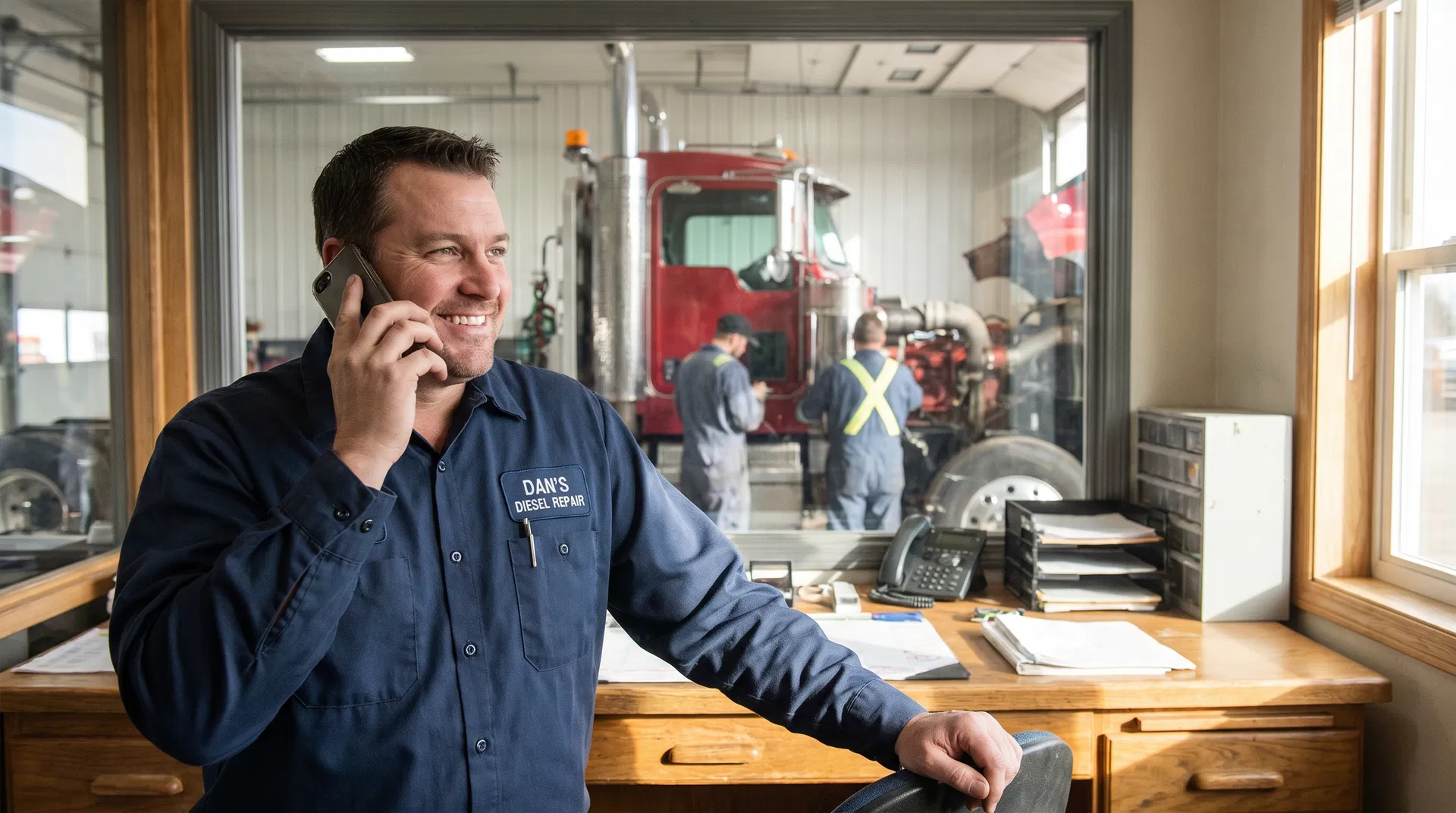
Somewhere in the daily rhythm of a busy heavy equipment repair shop — between the morning technician briefing, the parts order that came in wrong, the customer who showed up without an appointment, and the invoice dispute that needs to be resolved before end of day — there is a two-minute phone call that most shops never make.
It goes something like this: the machine that came in last Tuesday for a hydraulic pump replacement has been back in service for a week. You pick up the phone, call the fleet manager or the owner, and ask one question: how is the machine running? That is it. Two minutes. Maybe three if they want to talk.
The research on customer retention in the heavy-duty repair market is consistent on this point. A follow-up call 30 days after a major repair demonstrates ongoing commitment to customer satisfaction in a way that no marketing material can replicate. It verifies that the repair is holding up, which gives the customer confidence. It surfaces any concerns before they become complaints. And it creates a moment of genuine human connection in a business relationship that can otherwise feel purely transactional.
Why Most Shops Don't Do It
The honest answer is that most shops don't make follow-up calls because they are busy, and because the immediate return on those two minutes is not obvious. The machine is fixed. The invoice is paid. There is a new machine in the bay that needs attention. The follow-up call feels like a luxury.
This is the wrong frame. The follow-up call is not a luxury — it is a retention mechanism. In the heavy equipment repair market, where a single fleet account can represent $50,000 to $200,000 in annual revenue, the cost of losing a customer to a competitor is enormous. The cost of making a two-minute phone call is approximately two minutes.
The shops that have built systematic follow-up processes — whether through a service manager who makes calls every Friday afternoon, or through a simple reminder system that flags jobs for follow-up at the 30-day mark — consistently report higher customer retention rates and more referral business. Their customers become advocates because they have been treated as relationships, not transactions.
What to Say
The follow-up call does not need to be scripted, but it benefits from a clear purpose. You are not calling to upsell. You are not calling to check on payment. You are calling to ask how the machine is running and to let the customer know that you stand behind your work.
A simple structure works well: introduce yourself, reference the specific repair, ask how the machine is performing, and close with an open offer — if anything comes up, give us a call. That is it. If the customer wants to talk about the next service interval, great. If they want to mention that they have another machine that needs attention, even better. But the purpose of the call is not to generate the next job. The purpose is to demonstrate that you care about the outcome of the last one.
The Compound Effect
The value of a systematic follow-up process compounds over time in ways that are difficult to measure but impossible to ignore. Customers who receive follow-up calls are more likely to call you first when the next problem arises. They are more likely to mention your shop when a colleague asks for a recommendation. They are more likely to give you the benefit of the doubt when something goes wrong — because they know from experience that you will make it right.
In the heavy equipment repair market, where word of mouth travels through tight networks of contractors, fleet managers, and equipment operators, that kind of reputation is worth more than any advertising spend. The two-minute call is not just a customer service tactic. It is a business development strategy.
Building the System
The shops that do this well have made it a process, not a personality trait. They do not rely on the service manager's memory or the owner's relationship skills. They have a system — whether it is a flag in their shop management software, a weekly list generated from closed repair orders, or a simple spreadsheet — that ensures every major repair gets a follow-up call at the 30-day mark.
The definition of 'major repair' can vary by shop, but a reasonable threshold is any repair order over $1,500 or any repair involving a critical system — engine, transmission, hydraulics. These are the jobs where the customer has the most at stake, and where a follow-up call carries the most weight.
The shops that have built this habit report that it takes about three months to become second nature. After that, it is just part of how they operate — and the customers notice.
Tags
Ready to take control of your AR?
Start your free trial and see how Talox automates collections, syncs your platforms, and keeps cash flowing.
Get the next article in your inbox
Join shop owners and mechanics who get Talox industry insights, data reports, and field guides — no sales pitches, just the good stuff.
No spam. Unsubscribe anytime.