Technology 5 min read April 24, 2026
Wrench Meets Wi-Fi: The Diagnostic Tools Heavy Equipment Mechanics Are Actually Using in 2026
A practical field guide to the software, hardware, and workflows that top-performing shops are using to cut diagnostic time in half — from Noregon JPro to telematics pre-arrival workflows.
T
Talox Editorial
Talox Editorial
Share this article
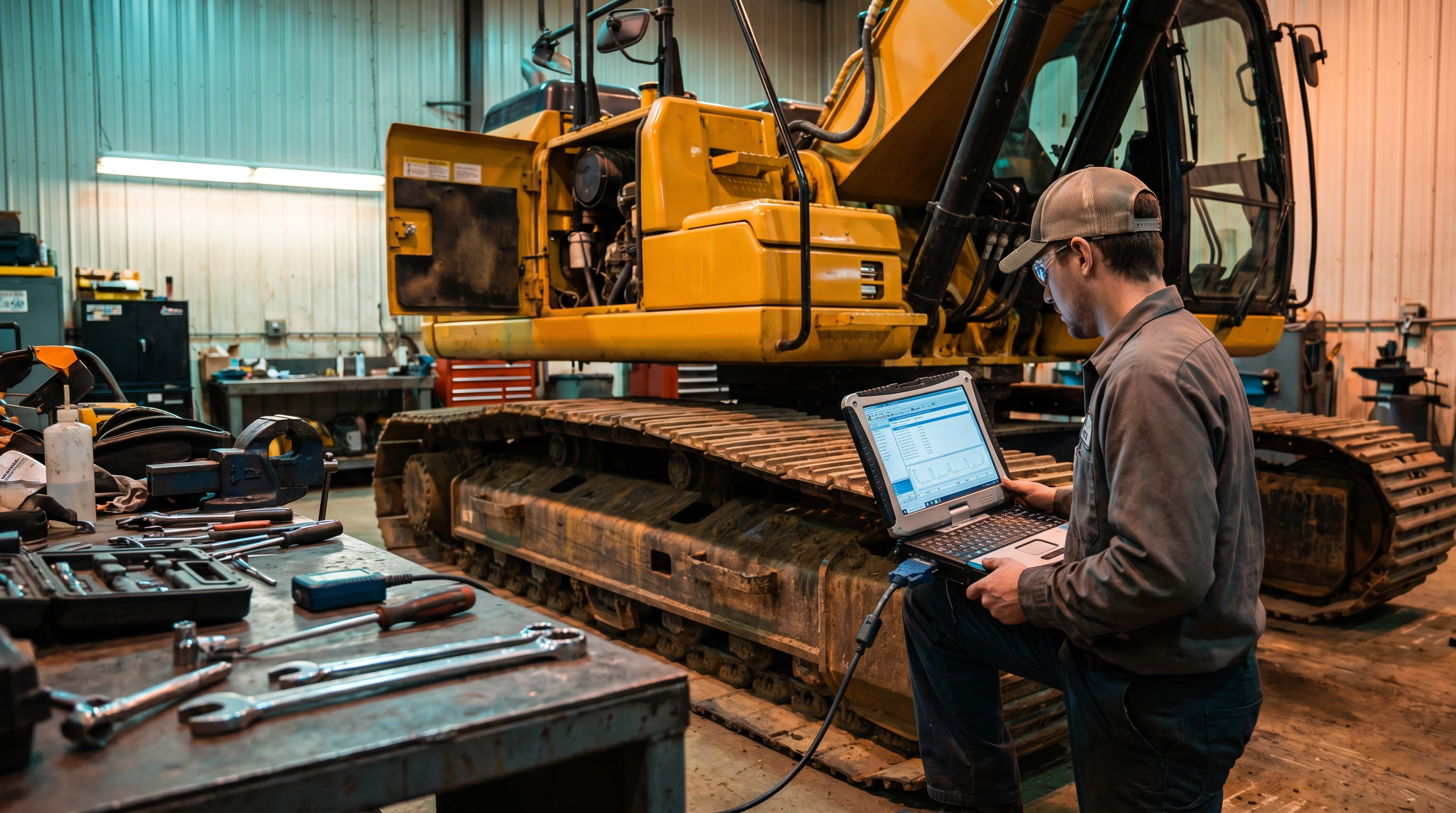
<p>Ask a heavy equipment mechanic what their most-used tool is and ten years ago the answer would have been a torque wrench or a pressure gauge. Today, in shops doing $2M or more in annual revenue, the answer is increasingly a laptop running diagnostic software. Not instead of the wrench — alongside it.</p>
<p>This is a practical guide to what is actually working in the field. Not a spec sheet comparison. What tools are mechanics picking up every day, what workflows are cutting diagnostic time, and where the real ROI is hiding.</p>
<h2>The Diagnostic Software Landscape in 2026</h2>
<p><strong>OEM-locked software</strong> is the gold standard for depth. Cat ET gives you live data on every sensor in a Cat machine, lets you perform active tests (commanding the machine to do things while you watch the data), and is the only tool that can perform certain calibrations after component replacement. The same is true for Komatsu KOMTRAX Plus, Deere Service Advisor, Volvo VCADS, and CNH EST. If you specialize in one brand, this is your primary tool. The limitation is obvious: it only works on that brand.</p>
<p><strong>Multi-brand diagnostic platforms</strong> are the workhorse for independent shops running mixed fleets. Noregon JPro is the most widely used in heavy equipment and commercial truck shops. It reads fault codes, live data, and performs some active tests across hundreds of makes and models. Cojali Jaltest has strong European equipment coverage (Liebherr, Manitowoc, Terex). These tools do not go as deep as OEM software on any single brand, but they cover the breadth that independent shops need.</p>
<p><strong>Telematics platforms</strong> are the newest category to become genuinely useful for diagnostics. Cat Product Link, Komatsu KOMTRAX, Deere JDLink, and Volvo CareTrack all expose fault history, utilization data, and location via web portals and APIs. The shops that have figured out how to integrate telematics into their intake workflow — pulling fault history before the machine arrives, pre-ordering parts, briefing the technician before the machine rolls in — are reporting 20–35% reductions in diagnostic time per job.</p>
<h2>Hardware: The Adapters That Actually Matter</h2>
<p>The software is only as good as the hardware connecting it to the machine. The Nexiq USB-Link 2 is the industry standard for commercial trucks and crosses over well to construction equipment. It is reliable, widely supported, and the driver stack is stable. The Noregon DLA+ 2.0 is the companion hardware for JPro and is purpose-built for the heavy equipment and truck market. Both run around $400–$600 and are worth every dollar compared to the $80 knockoffs that drop packets and give you incomplete fault trees.</p>
<p>For electrical diagnostics — which you will inevitably need when the fault code points to a sensor or harness issue — the Fluke 88V automotive multimeter and a basic two-channel oscilloscope round out the bench. CAN bus signal quality issues, intermittent sensor faults, and ECM communication errors all require oscilloscope work to diagnose definitively.</p>
<h2>The Pre-Arrival Workflow: Where the Real Time Savings Are</h2>
<p>The most significant efficiency gain available to independent shops right now is not a new tool — it is a new workflow. The pre-arrival diagnostic workflow works like this: the customer calls with a fault. Before scheduling the appointment, your service writer asks for the machine's telematics login or the fault code display on the machine's monitor. If the machine has telematics, you pull the fault history remotely. You identify the likely root cause, check your parts inventory, and order what you do not have. When the machine arrives, the technician has already reviewed the fault tree, the part is on the shelf, and the job starts at diagnosis confirmation rather than at fault identification.</p>
<p>Shops that have implemented this workflow report that it eliminates the most common source of job delay: waiting for parts after diagnosis. In markets where parts delivery is next-day or longer, this workflow can cut a 3-day job to a 1-day job simply by moving the parts order 24 hours earlier in the process.</p>
<h2>Mitchell 1 TruckSeries: The Wiring Diagram Advantage</h2>
<p>For shops that work on commercial trucks alongside heavy equipment — which describes most independent shops in construction markets — Mitchell 1 TruckSeries deserves specific mention. Its wiring diagram coverage for medium and heavy-duty trucks is the most comprehensive available from a third-party provider. When a fault code points to a wiring issue, having the correct wiring diagram is not optional. Chasing a wiring fault without the diagram is how a 2-hour job becomes an 8-hour job.</p>
<p>The 2025 update to TruckSeries added enhanced search functionality that lets technicians find wiring diagrams by symptom rather than just by system. A technician can type "intermittent no-start" and get a curated list of the wiring circuits most commonly associated with that symptom on that specific truck. That is a genuine time saver.</p>
<h2>The Training Imperative</h2>
<p>None of these tools work without trained technicians. The diagnostic software is only as useful as the person interpreting the data. A fault code is a starting point, not a conclusion. P0087 — fuel rail pressure too low — could be a fuel pump, a fuel filter, a pressure regulator, a leaking injector, or a software calibration issue. The tool tells you where to look. The technician decides what it means.</p>
<p>The shops investing in diagnostic training — OEM certification programs, EETC credentials, Noregon's own training curriculum — are the shops building a durable competitive advantage. The tool is available to everyone. The expertise to use it is not.</p>
Tags
technologydiagnosticsmitchell 1noregontelematicstraining
Ready to take control of your AR?
Start your free trial and see how Talox automates collections, syncs your platforms, and keeps cash flowing.
Get the next article in your inbox
Join shop owners and mechanics who get Talox industry insights, data reports, and field guides — no sales pitches, just the good stuff.
No spam. Unsubscribe anytime.
More in Technology
Technology
The Computer in the Cab: How New Technology Is Changing What It Means to Be a Heavy Equipment Mechanic
5 min read

Technology
Bluelight's Retrofit Autonomy Kit: When Your Customer's Existing Machine Gets an Upgrade
2 min read
Technology
Hydraulics Never Lie: A Field Guide to Preventive Maintenance That Actually Prevents
7 min read