Technology 5 min read April 24, 2026
The Computer in the Cab: How New Technology Is Changing What It Means to Be a Heavy Equipment Mechanic
From telematics and CAN bus systems to AI-assisted fault detection, the machines rolling into your bay today are more computer than combustion. Here is what that means for the mechanic holding the wrench.
T
Talox Editorial
Talox Editorial
Share this article
<p>There was a time when diagnosing a sick excavator meant listening to it. You could hear a bad injector, feel a slipping clutch, smell a hydraulic leak before you ever opened the hood. That era is not over — but it has a roommate now, and that roommate runs on software.</p>
<p>Modern heavy equipment — Caterpillar, Komatsu, Deere, Volvo, Liebherr — ships from the factory with more computing power than the Apollo program. A 2024 Cat 374 hydraulic excavator has over 100 electronic control modules (ECMs) communicating across a Controller Area Network (CAN bus). The machine generates thousands of data points per minute: fuel trim, hydraulic pressure curves, DEF dosing rates, swing motor efficiency, bucket cycle times. It sends fault codes before the operator notices anything is wrong. In some cases, it sends them before anything is actually wrong — predictive diagnostics flagging wear patterns that will become failures in 200 hours if left unaddressed.</p>
<h2>What Changed in the Cab</h2>
<p>The cab transformation started with Tier 4 Final emissions compliance, which went fully into effect for large equipment in 2015. Meeting EPA Tier 4 Final standards required Diesel Particulate Filters (DPF), Selective Catalytic Reduction (SCR) systems, and Exhaust Gas Recirculation (EGR) — all of which require electronic management. You cannot tune a Tier 4 engine with a screwdriver. You need software.</p>
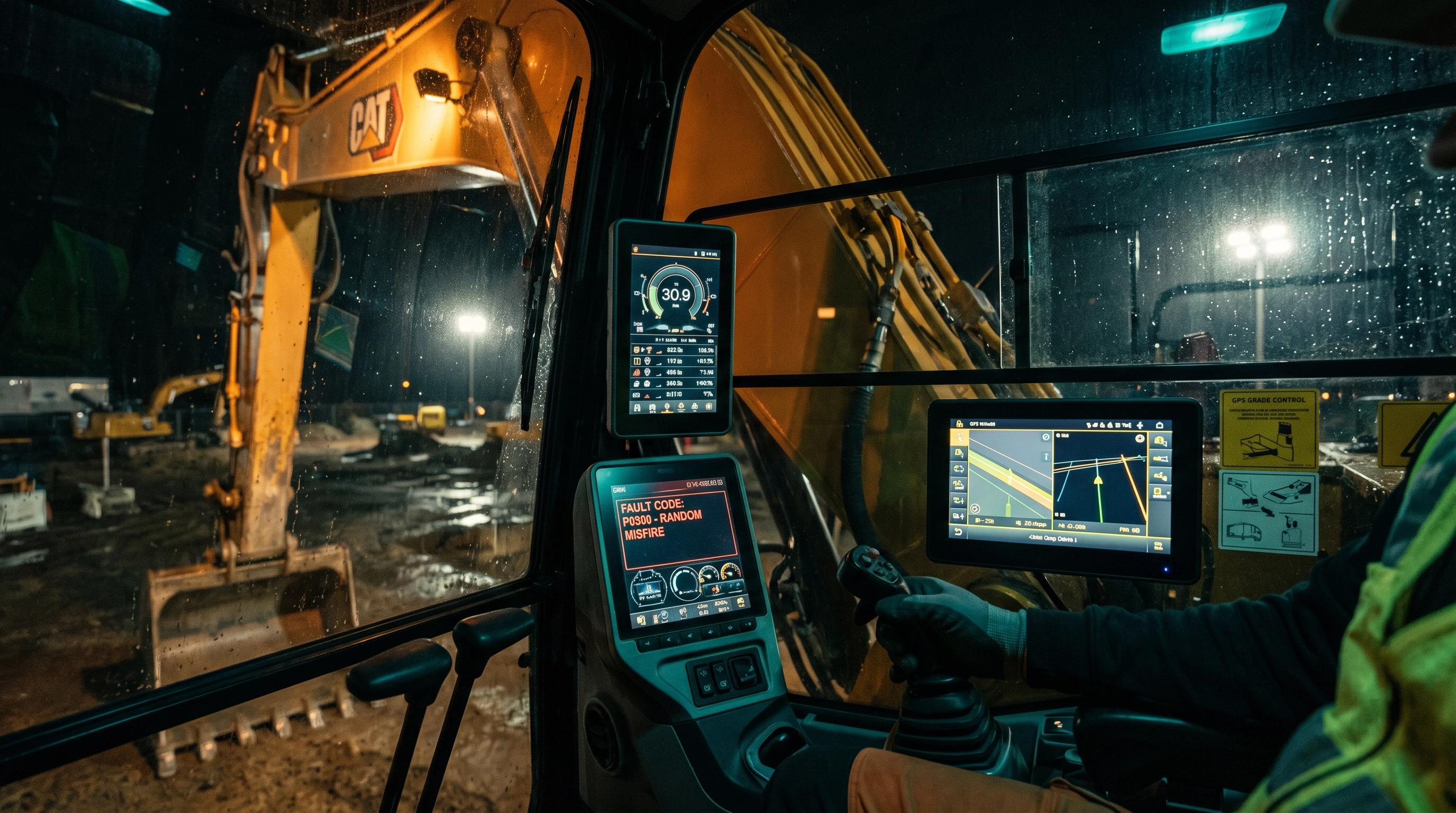
<p>That opened the door. Once OEMs had to put computers in the machines to manage emissions, they kept going. Today's cab is a rolling data center. Operators interact with touchscreen displays showing real-time machine health. GPS-based grade control systems talk to the hydraulic ECM to hold blade elevation within a centimeter. Load management systems calculate payload on every bucket cycle and alert the operator when the truck is overloaded before the haul begins.</p>
<p>For the mechanic, this is both a gift and a challenge. The gift is information. When a 2023 Komatsu PC390 rolls into your bay with a hydraulic fault, the machine already knows what is wrong. The ECM has logged the fault code, the operating conditions at the time of fault, the temperature, the pressure reading that triggered the alert, and the number of times the fault has occurred. You are not starting from zero. You are starting from a diagnosis.</p>
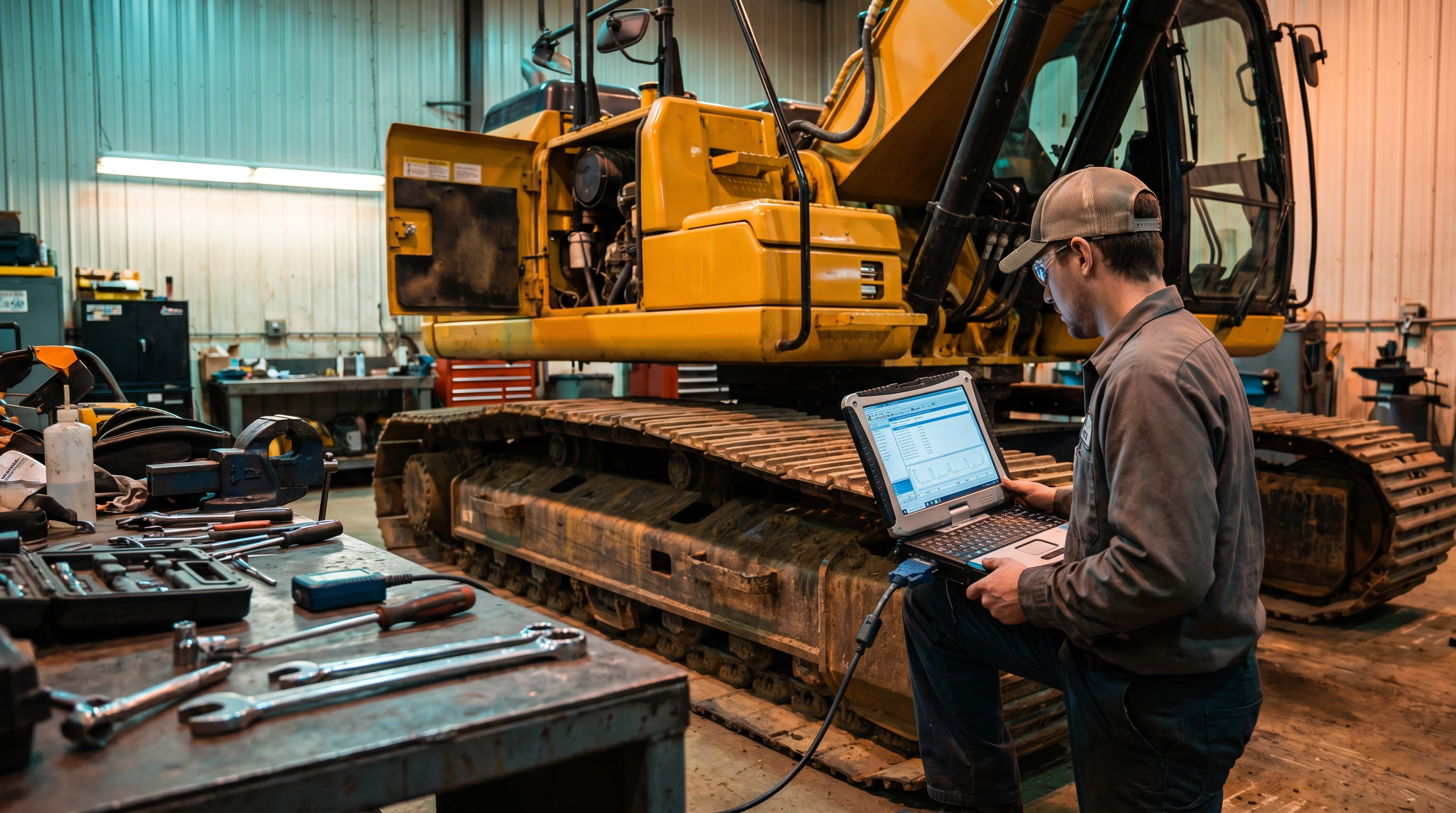
<p>The challenge is that reading that diagnosis requires tools and training that did not exist ten years ago. A laptop running Cat ET (Electronic Technician), Komatsu KOMTRAX Plus, or Deere's Service Advisor is now as essential as a torque wrench. And the software changes. OEMs push updates. Fault code libraries expand. A code that meant one thing on a 2018 machine may have a different root cause on a 2024 machine with revised software.</p>
<h2>The Diagnostic Stack a Modern Shop Needs</h2>
<p>The shops that are winning right now — the ones with 90-day AR cycles instead of 180-day, the ones with technician utilization above 75% — have invested in their diagnostic infrastructure. Here is what that looks like in practice:</p>
<p><strong>OEM-specific diagnostic software.</strong> Cat ET, Komatsu KOMTRAX, Deere Service Advisor, Volvo VCADS, CNH EST. Each one is a subscription, typically $800–$2,500 per year per license. If you work on mixed fleets, you need multiple licenses. This is not optional. You cannot read live data or perform calibrations without it.</p>
<p><strong>A quality J1939/CAN bus interface.</strong> The Noregon JPro, Nexiq USB-Link 2, and Cojali Jaltest are the workhorses. These hardware adapters bridge the machine's CAN bus to your laptop. The quality of the adapter matters — cheap adapters drop packets and give you incomplete data.</p>
<p><strong>Telematics access.</strong> If your customer's fleet is connected — Cat Product Link, Komatsu KOMTRAX, Deere JDLink, Volvo CareTrack — you can pull fault history, utilization data, and location before the machine even arrives. Some shops are building pre-arrival diagnostic workflows: the machine calls in a fault, the shop pulls the data, orders the part, and has it on the shelf when the machine arrives. That is a real competitive advantage.</p>
<p><strong>Oscilloscope and multimeter capability.</strong> CAN bus diagnostics eventually lead you to wiring. Intermittent faults, sensor failures, and ECM communication errors require electrical diagnostic skills. A Fluke 88V or equivalent, plus a basic oscilloscope, is essential for chasing gremlins in the harness.</p>
<h2>The Skills Gap Is Real — and It Is an Opportunity</h2>
<p>The 2025-2026 Fullbay State of Heavy-Duty Repair report found that technician shortage remains the number one operational challenge for independent repair shops. The shortage is not just about headcount — it is about capability. Shops can find mechanics who can swing a wrench. They cannot easily find mechanics who can swing a wrench and read a CAN bus fault tree and calibrate a DEF dosing injector.</p>
<p>That gap is an opportunity for the mechanic willing to invest in training. The OEMs all offer certification programs. Cat's Service Technician Accreditation Program (STAP), Komatsu's Technical Training Center in Cartersville, Georgia, and Deere's Tech Certification program are all legitimate credentials that command higher billing rates. Independent training through the Associated Equipment Distributors (AED) and the Equipment & Engine Training Council (EETC) fills the gaps between OEM programs.</p>
<p>The mechanic who can walk into a bay, plug in a laptop, read the machine's own diagnosis, and then go hands-on to fix what the data is pointing to — that person is not being replaced by technology. That person is the technology.</p>
<h2>What This Means for Your Shop</h2>
<p>If you are running a shop and you have not audited your diagnostic software subscriptions in the last 18 months, do it this week. The OEMs update their software more frequently than most shops realize, and running outdated diagnostic software means you are reading incomplete fault code libraries. It also means you cannot perform software-controlled calibrations — things like injector trim codes, hydraulic pressure calibrations, and DPF regeneration — that are now required after many component replacements.</p>
<p>The investment in diagnostic infrastructure pays back quickly. A technician who can diagnose a fault in 45 minutes instead of 3 hours is a technician who can complete more jobs per week. That is not a technology story. That is a revenue story.</p>
Tags
technologydiagnosticstelematicscan bustier 4training
Ready to take control of your AR?
Start your free trial and see how Talox automates collections, syncs your platforms, and keeps cash flowing.
Get the next article in your inbox
Join shop owners and mechanics who get Talox industry insights, data reports, and field guides — no sales pitches, just the good stuff.
No spam. Unsubscribe anytime.
More in Technology
Technology
Wrench Meets Wi-Fi: The Diagnostic Tools Heavy Equipment Mechanics Are Actually Using in 2026
5 min read

Technology
Bluelight's Retrofit Autonomy Kit: When Your Customer's Existing Machine Gets an Upgrade
2 min read
Technology
Hydraulics Never Lie: A Field Guide to Preventive Maintenance That Actually Prevents
7 min read