Texas Heavy Equipment Repair: Inside the $142 Billion Infrastructure Surge
Texas leads the nation in construction spending at nearly $90 billion annually. For heavy equipment repair shops in Houston, Dallas, and San Antonio, this is a once-in-a-generation opportunity — if they can manage the cash flow.
Talox Editorial Team
Industry Research
Texas Heavy Equipment Repair: Inside the $142 Billion Infrastructure Surge
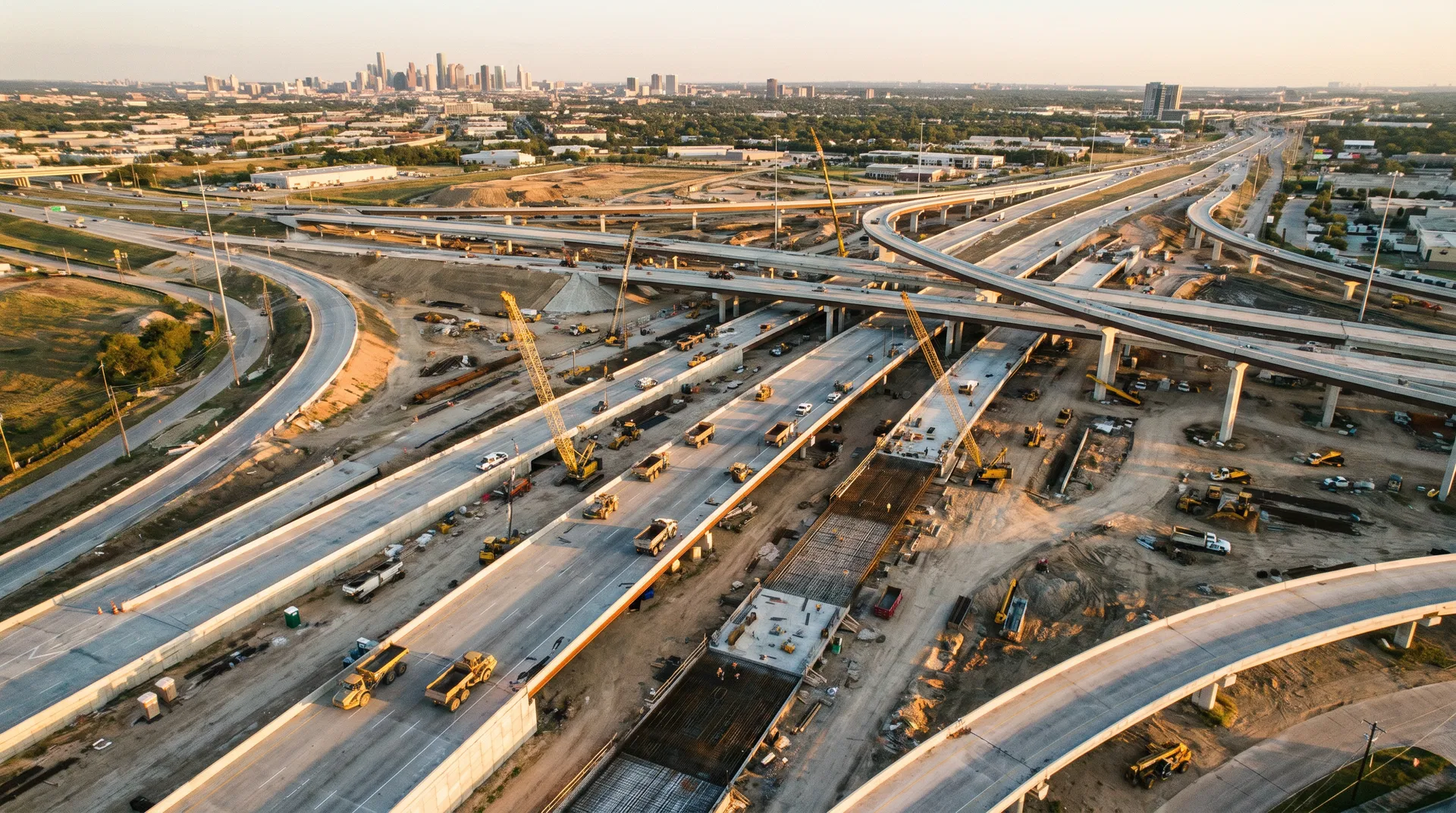
Texas is not experiencing a construction boom. It is experiencing a construction epoch. The numbers are so large they require context to fully appreciate: according to ConstructConnect, Texas leads the nation in commercial construction spending, topping nearly $90 billion annually — more than double the next closest state. The Texas Department of Transportation has unleashed a $35.4 billion highway spending plan as part of a broader $40 billion infrastructure initiative. And by early 2026, analysts at The Birm Group were tracking $142 billion in active and committed infrastructure projects across the state.
For heavy equipment repair shops in Texas, this is the market condition that defines a generation.
Where the Work Is Concentrated
The DFW Metroplex, Houston, and the Austin-San Antonio corridor account for nearly 70% of statewide infrastructure spending. Each of these markets has distinct characteristics that shape equipment demand.
Houston remains the energy capital of the world, and the intersection of energy infrastructure and general construction is creating unusual demand patterns. LNG export terminal expansions along the Gulf Coast require enormous amounts of heavy civil equipment — cranes, pile drivers, excavators — operating in corrosive coastal environments that accelerate maintenance cycles. The Port of Houston expansion, one of the largest port infrastructure projects in U.S. history, is adding to this demand.
Dallas-Fort Worth is being reshaped by corporate relocations and population growth at a pace that has overwhelmed existing infrastructure. Highway expansion, transit projects, and the buildout of industrial parks to support the logistics boom are keeping equipment fleets running at capacity. A 720,000-square-foot heavy equipment manufacturing plant recently announced for San Antonio's South Side will add to the regional demand for maintenance and repair services.
The Austin-San Antonio corridor is the semiconductor and advanced manufacturing belt of Texas. TSMC's $65 billion fab complex in north Phoenix has a Texas analog in the Samsung Austin Semiconductor expansion and the broader chip manufacturing buildout along the I-35 corridor. These facilities require years of heavy civil construction before a single chip is produced.
The AR Problem at Scale
Texas shops are not struggling to find work. They are struggling to get paid for it. The scale of Texas construction means that many of the customers sending equipment to independent repair shops are large general contractors and fleet operators with 30-, 60-, or even 90-day payment terms baked into their contracts.
For a shop doing $2 million in annual revenue, having 25% of that tied up in AR at any given time means $500,000 in work performed but not yet collected. In a state where equipment costs, labor rates, and parts prices are all rising, that cash flow gap is the difference between growth and stagnation.
The shops winning in Texas are the ones that have built automated AR collection systems, track their lien rights aggressively, and maintain clean billing contact data across their customer base. Texas has strong mechanic's lien statutes that protect repair shops — but only if the paperwork is filed correctly and on time.
The Opportunity for Independent Shops
The $142 billion infrastructure surge in Texas is not primarily a story about large OEM dealers. It is a story about independent repair shops that can respond faster, build relationships with local fleet operators, and provide the kind of personalized service that keeps equipment running on tight project schedules.
The shops that will capture the most value from this cycle are those that treat their back office as a competitive advantage — not an afterthought.
Tags
Ready to take control of your AR?
Start your free trial and see how Talox automates collections, syncs your platforms, and keeps cash flowing.
Get the next article in your inbox
Join shop owners and mechanics who get Talox industry insights, data reports, and field guides — no sales pitches, just the good stuff.
No spam. Unsubscribe anytime.
More in Market Analysis
Q1 2026 State of Heavy Equipment Repair: A Vero Intelligence Report
18 min read
The Real Cost of Downtime: What the Data Says About Equipment Availability and Shop Profitability
6 min read
What the Numbers Say: Vero's First Look at AR Collections Patterns Across Heavy Equipment Repair
7 min read